

How to Stop Overfunctioning
(When You Don’t Know How to Not Be the Strong One)

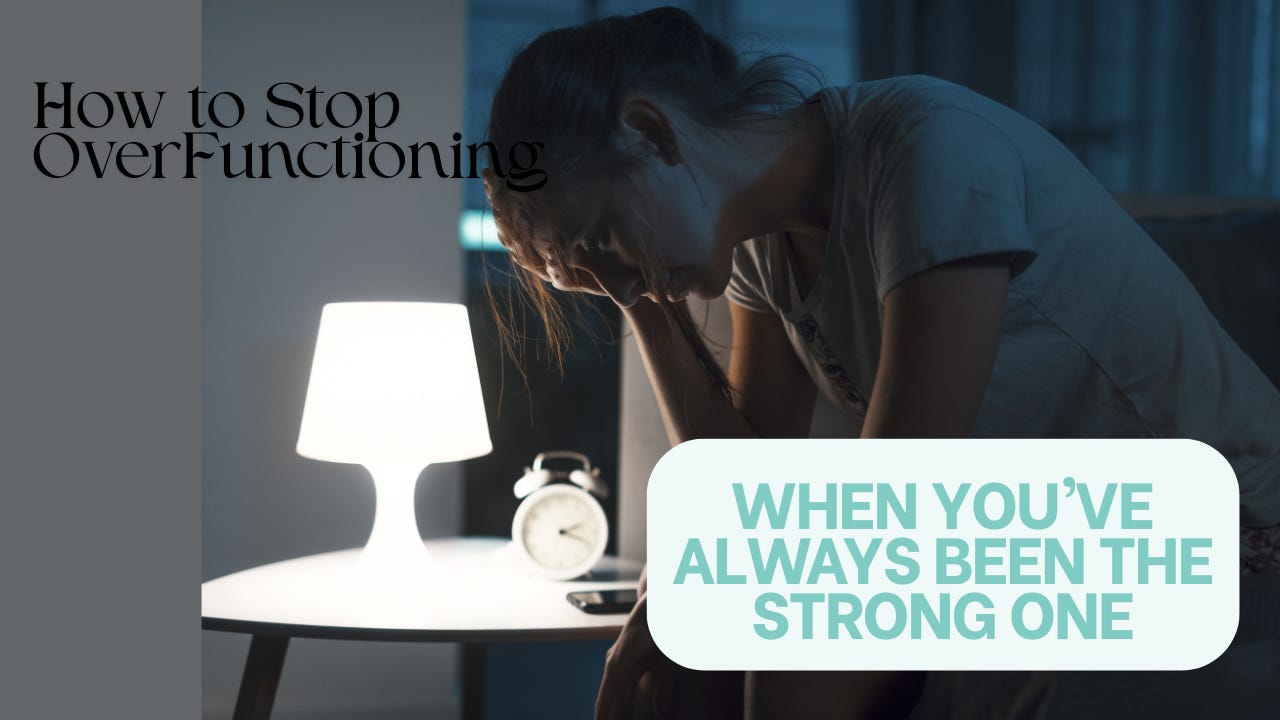
Let’s be honest:
Some of us didn’t choose to be the strong one.
We were handed the title like a family heirloom:
“The Responsible One.”
“The One Who Handles It.”
“The One Everyone Calls.”
“The One Who Can Take It.”
“The One Who Will Fix It.”
Translation:
The one who burns out quietly while everyone else eats snacks and complains.
And because you’ve spent YEARS being the glue, the spine, the emotional airbag, the logistical master, the peacemaker, the fallback plan, the therapist, the medic, the breadwinner, the emotional sherpa…
…you don’t actually know how to not do it.
Overfunctioning becomes a reflex.
A survival skill.
A nervous-system setting.
And here’s the plot twist:
Overfunctioning is not about competence.
It’s about trauma math.
Somewhere deep down your brain decided:
“If I handle everything, I’ll be safe.”
Except — you’re not safe.
You’re exhausted.
And your reset?
It’s the lifeline that helps you step out of this autopilot role and back into your actual life.
Let’s break it down.
Why You Overfunction (Hint: You’re Not Broken, You’re Conditioned)
Overfunctioning is a nervous-system response, not a personality flaw.
It comes from:
1. Childhood conditioning
Being parentified.
Being punished for needs.
Being rewarded for being “good,” “quiet,” “helpful,” and “selfless.”
Your brain learned:
Love is earned through usefulness.
2. Survival mode adulthood
Toxic relationships.
Financial instability.
Narcissistic partners.
Chaotic environments.
Your brain adapted with:
If I don’t handle everything, everything collapses.
3. Fear of disappointing anyone
Because disappointment once equaled danger.
4. Secret guilt about resting
Because rest feels like abandonment when you’re trained to think your worth = labor.
So when someone says “just stop doing so much,” your nervous system says:
“Babe… do you want us to DIE?”
This is why the Reset is crucial — it literally helps you rewire these patterns through small, safe shifts.

Photo by John Arano on Unsplash
Signs You’re Overfunctioning (AKA: The Strong One Starter Pack)
You do things before anyone asks.
You anticipate everyone’s needs, even strangers.
You feel guilty sitting down if others are moving.
You explain, justify, or over-explain.
You don’t ask for help because it feels like “more work.”
You take pride in being low-maintenance but secretly crave care.
You’re calm until you’re catastrophically NOT.
You’re “fine,” “okay,” “managing,” “just tired,” and other lies.
If this is you, congratulations:
You’re not alone. You’re simply a woman who’s been carrying too much for too long.
How to Stop Overfunctioning (Without Making Your Nervous System Freak Out)
Here’s how we begin the shift gently, sustainably, WITHOUT making you feel like you’re free-falling. That was a huge surprise to me — when things were chaos and I was hanging on by a fingernail, I felt CALM. When I started trying to slow down and reconnect with myself — panic attacks became my best friend.
Here is how I found my peace.
1. Start with ONE area to under-function on purpose
Laundry?
Dinner?
Solving your grown children’s crisis-of-the-week?
Pick one thing and do 10% less of it.
(It has to be uncomfortable, or it’s not actually helping.)
Your Reset gives you daily micro-actions that make this tolerable.
2. Delay your response by 60 seconds
When someone asks for something, before you leap like a well-trained golden retriever:
Pause. Breathe. Consider.
That 60-second pause interrupts the autopilot pattern that’s kept you stuck for years.
Your nervous system learns:
“I can pause. The world won’t end.”
3. Say simple scripts that buy you space
Not excuses — boundaries in plain clothes.
“Let me get back to you.”
“I need to think about that.”
“I can’t take that on today.”
“I trust you to figure that out.”
That last one?
Will feel like witchcraft the first time you use it.
4. Let things fall (just a tiny bit)
Not catastrophically.
Just enough to prove to your body:
Not everything depends on me.
If someone drops the ball, you do NOT swoop in like the exhausted superhero you are.
Let them handle it or let the ball roll under the couch.
Either way:
Not your circus. Not your chore chart.
5. Ask for micro-help
Don’t start with world peace or a kitchen remodel.
Start with:
“Can you grab that for me?”
“Can you take the trash out?”
“Can you bring me water?”
Your Reset gives you calmer nervous-system days so asking becomes easier.
6. Practice doing nothing while someone else works
Sit.
Rest.
Do not pop up to help.
Breathe through the discomfort.
Feel the urge to leap in… and DON’T.
Let your body experience the radical act of being supported.
7. End the day with a 30-second self-thank you
Look in the mirror or whisper in bed:
“Thank you for carrying so much. You don’t have to do it alone anymore.”
This rewires your identity — from The Strong One to The Supported One.
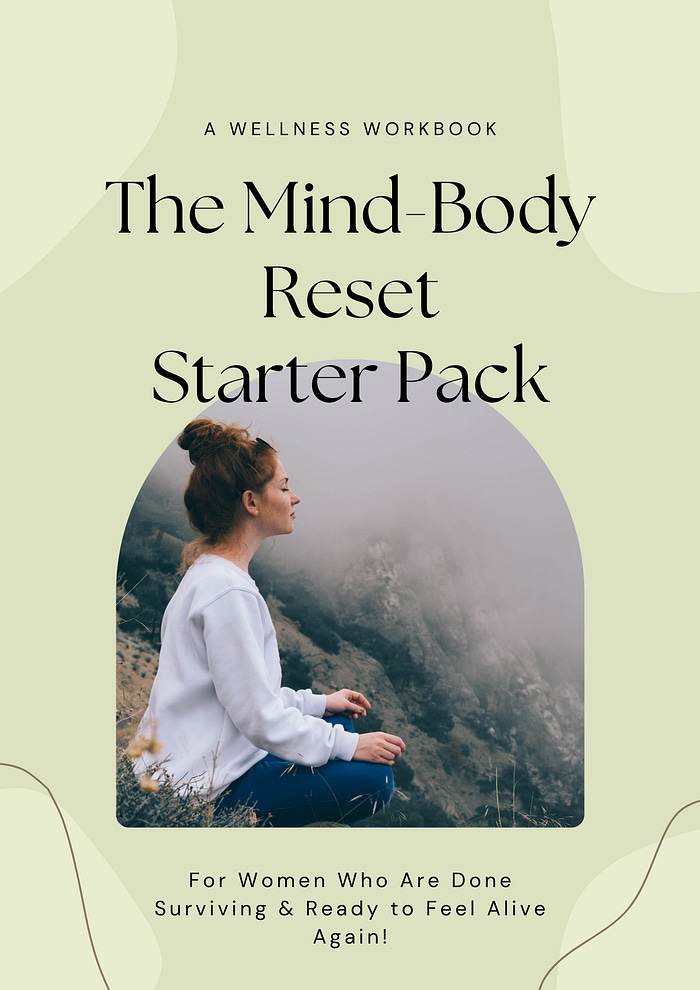
Coming SOON!! Join the tribe to be the first to know!
Why This Matters (and Why Your Reset Is the Perfect Moment to Do It)
Resetting your habits, your routines, your nervous system, your energy —
it’s all part of stepping OUT of survival roles and INTO your actual life.
Your Reset gives you:
Daily actions
Breathing room
Micro-boundaries
Nervous system calm
Permission
Structure
Repetition
Support
…so you can finally let go of the “strong one” role without feeling like the floor will collapse.
Because it won’t.
You just haven’t had the right scaffolding until now.
You deserve a life where you’re held, supported, loved, and safe — not because you do everything…
…but because you exist.
And my friend?
This Reset is the bridge from survival mode to self-support.
It’s your turn to rest.
Your turn to lean back.
Your turn to soften.
Your turn to be cared for.
You’ve already been strong.
Now you get to be whole.
Join the newsletter to be the first to know when new products (like the RESET!), get some great deals and freebies, and just hang out with your people! *I won’t share your info and you can unsubscribe anytime!